
In collaboration with EKWC and the TextielLab, Chicago-based industrial designer Brian Anderson came to Brabant to investigate how to make ceramics using textile mould. He wanted to find a cleaner, lighter and more local replacement for environmentally harmful plaster moulds. In the TextielLab, worked with product developpers Damien Semerdjian and Sarena Huizinga to develop fully fashioned pouches made from sustainable natural yarns such as linen and paper yarn, which he filled with a special type of balloom or air bladder.
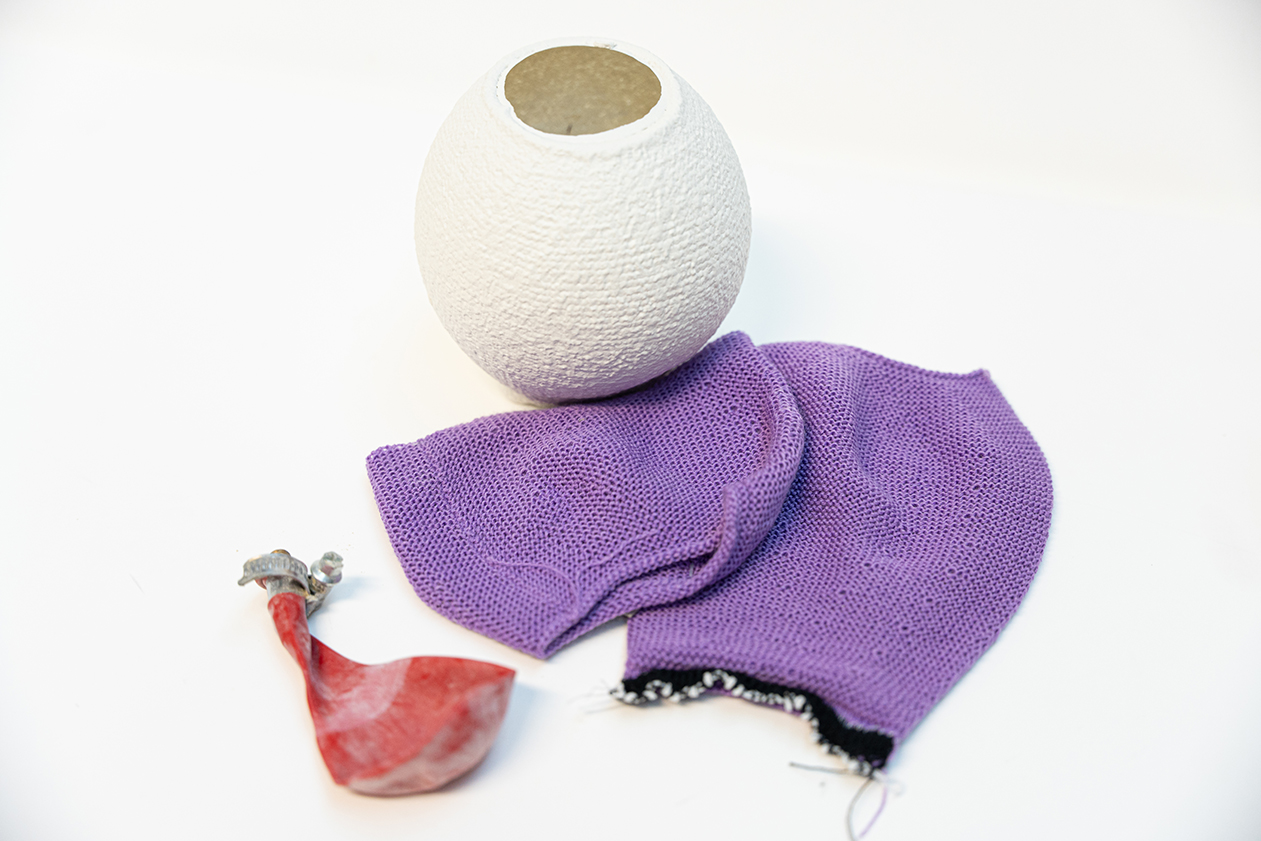
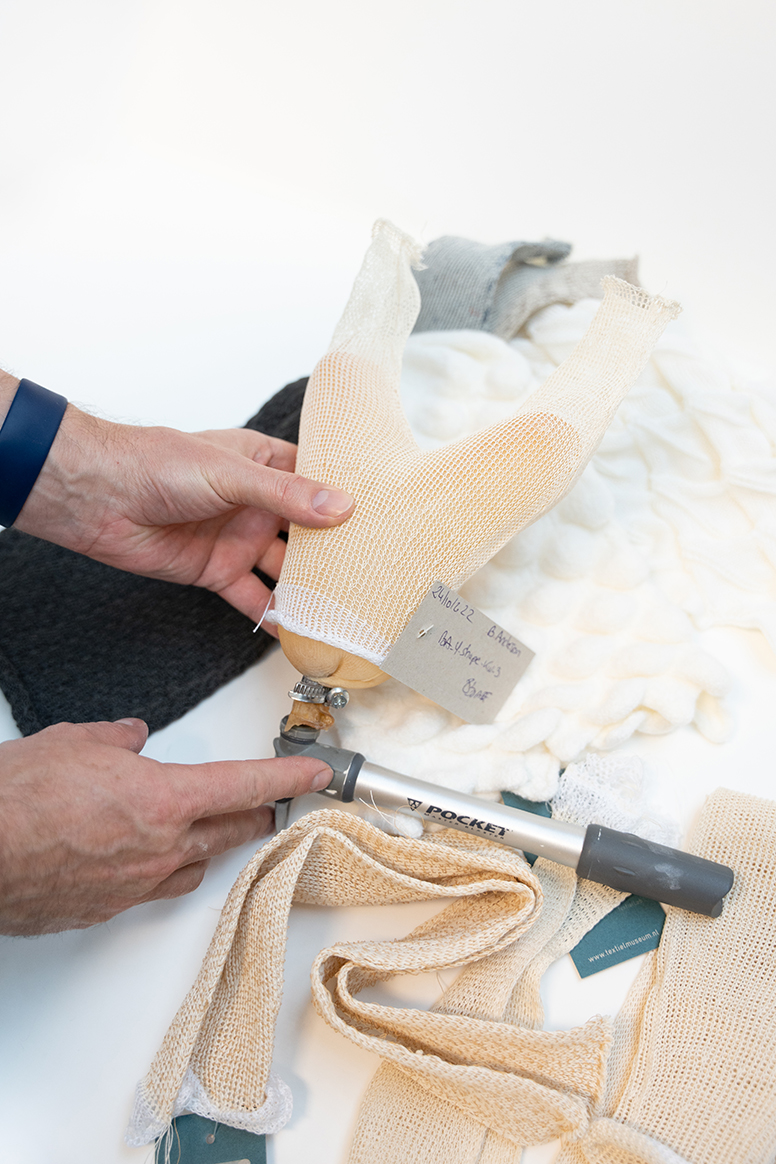
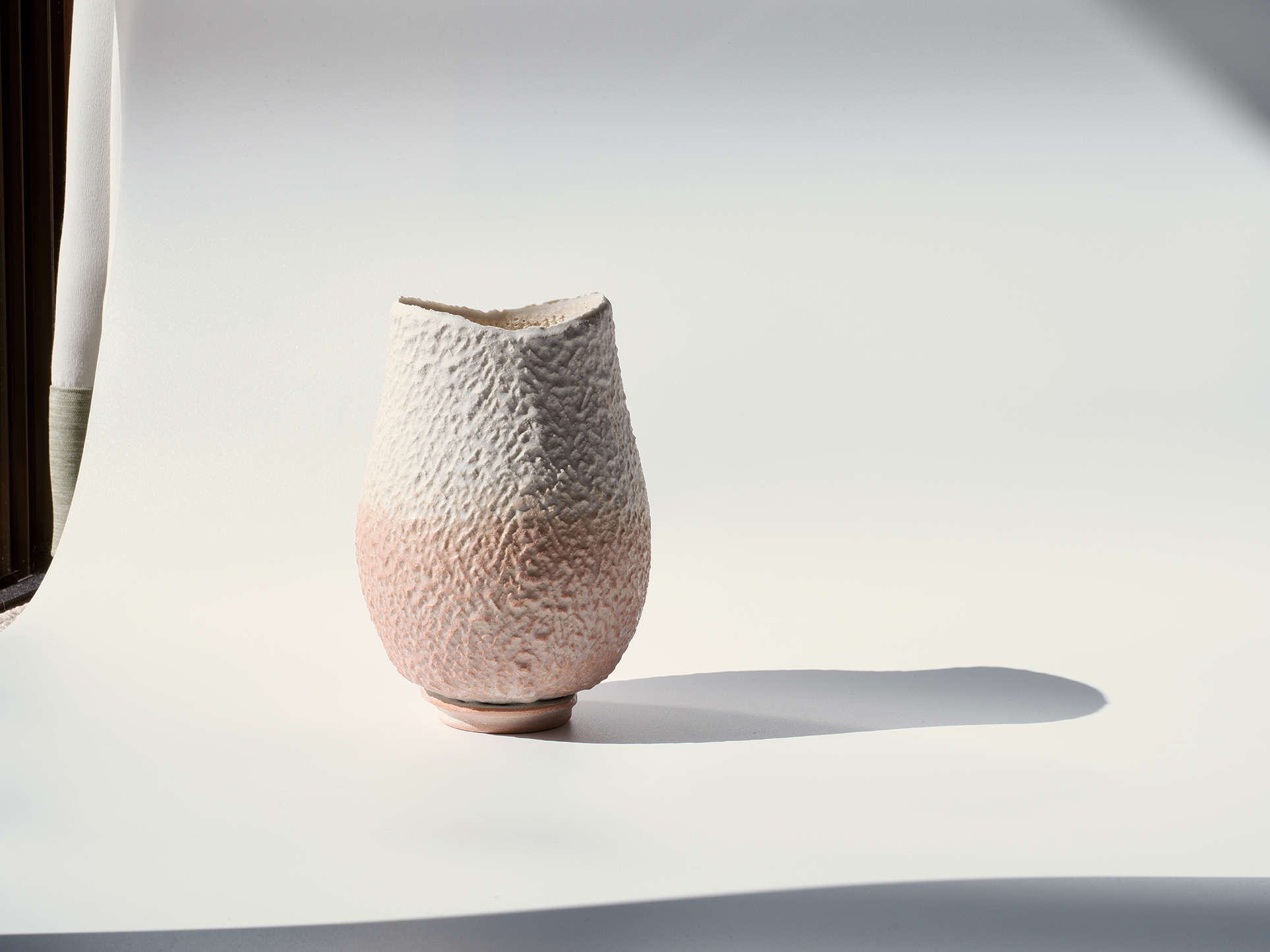
In collaboration with the EKWC and the TextielLab, Chicago-based industrial designer Brian Anderson came to Brabant to investigate how to make ceramics using textile mould. He wanted to find a cleaner, lighter and more local replacement for environmentally harmful plaster moulds. In the TextielLab, worked with product developpers Damien Semerdjian and Sarena Huizinga to develop fully fashioned pouches made from sustainable natural yarns such as linen and paper yarn, which he filled with a special type of balloom or air bladder. When the balloon is inflated, the knitting is pulled tight. This is then dipped, cast and covered with clay to form a vase. The vase is fired in a kiln at over 1,200 degrees. The yarn burns away, leaving the structure behind. To make the footprint of the mould as small as possible, Anderson used clay from the Meuse River in the final phase of the research. The results of this two-phase project were featured in the TextielMuseum exhibition Secrets of Making #3 .
Brian Anderson is an academic industrial designer and researcher at the University of Illinois at Chicago. His work focuses on innovative design strategies and the integration of technology into industrial design processes.





